
 Accounts
Last Updated: October 26, 2026
Quick Summary
The best soft sided luggage depends on your trip: the Glide Expandable Carry On suits short trips with 360-degree spinner wheels and front access, while the Glide Expandable Check In handles longer journeys. Prioritize fabric, YKK zippers, and wheel quality, since these three fail independently.
- Soft sided luggage compresses, expands, and squeezes into overhead bins that rigid shells cannot fit.
- YKK zippers are the industry benchmark because teeth align cleanly and sliders resist jamming.
- The commonly cited carry-on standard is 22 x 14 x 9 inches, but major carriers publish different numbers.
- The Zipsak Boost! Underseater starts as a pouch and expands into a four-wheeled carry-on.
- A two-piece set pairing a carry-on with a check-in covers the widest range of trips for the money.
Table of Contents
- What to Look For in Soft Sided Luggage
- Soft-Sided Luggage vs Hard-Sided Luggage
- The Best Softside Carry-On Luggage for Short Trips
- Lightweight Soft-Sided Luggage That Won't Weigh You Down
- Expandable Soft-Sided Luggage for Overpackers
- Checked Soft-Sided Luggage for Longer Trips
- Matching Luggage Sets and Value for Money
- Choosing the Right Soft Sided Luggage for Your Closet and Your Trips
- Frequently Asked Questions
What to Look For in Soft Sided Luggage
Soft sided luggage uses a flexible fabric or nylon exterior rather than a rigid shell, so it compresses, expands, and squeezes into tight spaces hard cases cannot. At Biaggi, we design foldable, space-saving bags for people who pack in small apartments and travel often.
A soft-sided suitcase is a system, not a shell: the fabric, zippers, and wheels fail independently, and any one can end a trip. Get those three right and the rest is preference.
Fabric, Zippers, and Wheel Quality
Start with the fabric: high-denier nylon or polyester with a tight weave and a water-repellent finish. Higher denier generally means better abrasion resistance, and a flexible exterior absorbs knocks rather than cracking.
Zippers matter more than most buyers realize. YKK zippers are the industry benchmark: teeth align cleanly and sliders resist jamming under load.
Wheels decide how the bag feels at hour six of a travel day.
A few more checks that separate good bags from great ones:
Soft-Sided Luggage vs Hard-Sided Luggage
Soft-sided luggage wins on flexibility, weight, and storage; hard-sided luggage wins on crush protection and water resistance.
Hard cases protect fragile items better and shrug off rain, but they scratch, crack under rough handling, and take up the same footprint whether full or empty.
Here is how the two compare on the factors that actually affect ownership:
| Factor | Soft-Sided Luggage | Hard-Sided Luggage |
|---|---|---|
| Weight | Lighter on average | Heavier shell |
| Storage when empty | Compresses or folds | Fixed footprint |
| Crush protection | Moderate | High |
| Expandability | Often expandable | Rarely |
| Scratch visibility | Low | High |
| Water resistance | Good with coating | Excellent |
If you check fragile equipment, a hard shell earns its weight. If you live in a small space and travel frequently, softside construction is the more practical choice.
The Best Softside Carry-On Luggage for Short Trips
The best softside carry-on luggage for short trips balances low weight, easy access, and quiet-rolling wheels. But the most common reason a carry-on gets gate-checked is dimensions, not weight or wheels. Soft-sided bags are more forgiving than hard shells but not exempt from the sizer, and an expandable bag that is compliant when zipped can exceed the limit once you open the gusset.
Airline carry-on dimensions: measure the bag, not the marketing
Carry-on limits vary more than most travelers expect. The commonly cited "standard" is 22 x 14 x 9 inches, but several major carriers publish different numbers, and enforcement ranges from a glance to a rigid sizer box. Check your carrier's published page and measure the bag's exterior, including wheels and handles, which many listings exclude.
A practical pattern most frequent flyers follow:
- Domestic U.S. majors: many publish limits close to 22 x 14 x 9 in, but a few are tighter on one dimension. Confirm on the airline's own baggage page rather than a third-party summary.
- International and low-cost carriers: limits are often smaller and weight caps are stricter, so a bag that passes a U.S. major may fail a low-cost European or Asian carrier.
- Underseat bags: these face a separate, smaller limit tied to the seat in front of you, and the usable space varies by aircraft and seat row.
How we evaluate a softside carry-on
Score each candidate on the same checks:
- Packed weight: weigh the empty bag, then packed for a realistic two-to-three-night trip. A light empty bag that forces a heavier packing style is not actually light.
- Usable capacity: measure the interior, not the exterior. Soft walls bulge, so advertised liters can overstate what fits without straining zippers.
- Rolling effort: roll the loaded bag on carpet, tile, and a curb. Spinners shine on smooth floors; two-wheel bags handle rough ground better.
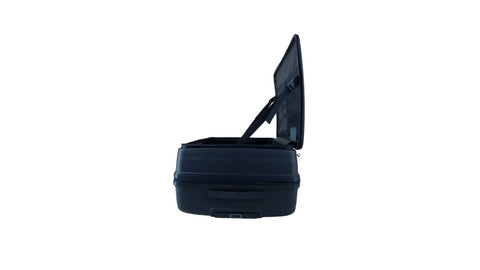
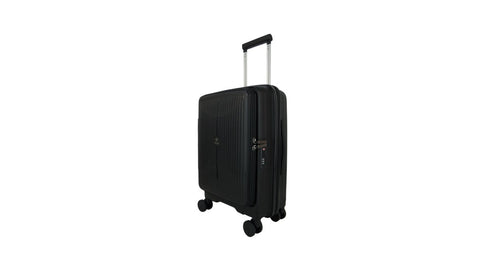
Our top pick for most short trips is the Glide Expandable Carry On. It pairs a lightweight build with 360-degree spinner wheels and a front-opening design, so you can reach what you need without flipping the bag flat on an airport floor.

Glide Expandable Carry On
Best for: frequent business travelers who want a light, maneuverable carry-on.
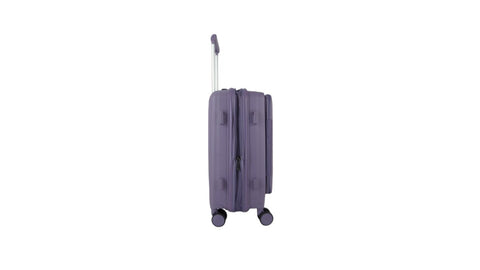
The Glide Expandable Carry On is built for the weekly trip: pack it once, open it from the front, and grab your charger without unpacking the whole bag. Smooth spinner wheels and a sturdy aluminum handle make it easy to steer through a crowded gate area.
Skip if: you need maximum crush protection for fragile gear, where a hard shell still wins.
Runway Hybrid Expandable Underseater
Best for: travelers who want to dodge gate-check stress entirely.
The Runway Hybrid Expandable Underseater fits under the seat in front of you, which means no fighting for overhead bin space and no gate-check gamble on a full flight.

Skip if: you pack for more than two nights, since underseat capacity has hard limits, and check the underseat dimensions for your specific aircraft, because they are not uniform across the fleet.
Lightweight Soft-Sided Luggage That Won't Weigh You Down
Lightweight soft-sided luggage matters because every kilo you save is a kilo you can pack. Airline weight allowances are strict on some routes, and a heavy empty bag eats into your allowance before you pack a single shirt. But "lightweight" is one of the least regulated words in luggage marketing, so know where the weight comes from.
Where the weight goes
A softside bag's empty weight is the sum of four things: the fabric, the frame or internal structure, the wheels and housings, and the handle assembly. Lightweight designs save weight in specific, identifiable ways:
- Fabric: high-denier nylon or polyester can be strong at low weight, but very thin fabric sags and abrades. The trade-off is real, not free.
- Frame: some bags use a minimal internal frame or none at all. That saves weight but can cost shape and stability when the bag is full.
- Wheels: spinner wheel assemblies add weight versus two fixed wheels. A four-wheel bag is usually heavier than a comparable two-wheel bag.
A bag unusually light for its size is worth a second look: the manufacturer saved weight somewhere.
How to compare weights honestly
Compare like for like. A carry-on and a large suitcase are not in the same class, and a listed weight that does not state whether it includes wheels and handles tells you little.
A repeatable approach:
- Weigh the empty bag yourself on a kitchen scale if you can, or look for a listing that states whether the figure is with wheels and handles.
- Weigh it packed for a realistic trip. The empty weight is only half the story; packing style can erase a 1-pound advantage quickly.
- Compare within size class, carry-on to carry-on, check-in to check-in, and note the fabric denier and wheel type alongside the weight.
The lightweight trade-off to watch
Cheaper bags save weight by skipping structure, which is why they sag and tip. The practical test: load the bag fully and stand it upright, if it slumps forward or the base bows, the savings came out of the frame.
Treat empty weight as one data point, not the headline. A slightly heavier bag with replaceable wheels and a rigid handle will usually outlast a featherweight bag with molded-in wheels, and cost less per trip over its life.
Expandable Soft-Sided Luggage for Overpackers
Expandable soft-sided luggage solves a specific problem: the trip that grows. You leave for four days and come home with seven days of laundry and a souvenir or two. An expandable suitcase gives you a few extra centimeters when you need it, then zips back down.
The mechanism is usually a second zipper that releases an extra gusset of fabric. It is simple and reliable.
Zipsak Boost! Underseater Expands to Carry-On
Best for: overpackers and minimalists who want one bag that adapts.
The Zipsak Boost! Underseater starts as a small, easy-to-store pouch and opens into a four-wheeled carry-on that slides under the seat. When you need more room, it expands upward into a full-size carry-on, and an extra-deep packing cube is included so your clothes stay organized while the rest of the bag holds everything else.
Skip if: you want a single fixed-size bag and dislike the idea of adjusting capacity mid-trip.
Checked Soft-Sided Luggage for Longer Trips
Checked soft-sided luggage earns its keep on longer trips, where capacity and durability matter more than squeezing into a bin.
For a week or more, look at a large or medium suitcase with compression straps, a sturdy telescoping handle, and wheels that can take weight.
The Glide Expandable Check In is our pick here. If you want the carry-on and the check-in together, the Glide 2 Piece Set covers both.


Matching Luggage Sets and Value for Money
Matching luggage sets usually cost less than buying the same pieces separately and guarantee a consistent look and feel. The catch: a set only saves money if you will use every piece.
Value for money is not the lowest sticker price, it is cost per trip over the life of the bag.
When you evaluate a set, check three things:
- Shared construction: do both pieces use the same shell, wheels, and handle quality?
- Combined coverage: does the set cover a weekend and a week, or two versions of the same trip?
- Warranty coverage: does the warranty apply to both pieces equally?
A two-piece set that pairs a carry-on with a check-in covers the widest range of trips for the money.
Choosing the Right Soft Sided Luggage for Your Closet and Your Trips
Choosing the right soft sided luggage comes down to matching three things: your storage space, your typical trip length, and how often you travel. Align those and the decision becomes obvious.
Here is a simple decision framework we use:
- Tiny closet, weekly trips: a foldable or expandable carry-on that stores flat
- Occasional weekend trips: an underseater that avoids gate checks
- Week-plus vacations: a checked bag with compression straps and strong wheels
If storage is your binding constraint, a bag that folds down to a fraction of its packed size changes what is possible in a small apartment. If durability is your concern, prioritize zipper and wheel quality over fabric pattern.
Frequently Asked Questions
Is soft-sided luggage more durable than hard-sided luggage?
It depends on what you mean by durable. Soft-sided luggage flexes on impact, so it resists cracking and denting, and its fabric and zippers can often be repaired. Hard-sided shells protect fragile items better but can crack under heavy handling. For soft sided luggage, check the fabric denier, zipper brand, and warranty before buying. A well-made softside suitcase with reinforced seams and quality spinner wheels will handle years of airport runs.
What is the best softside carry-on luggage for frequent business travel?
Look for a lightweight soft-sided carry-on with smooth 360-degree spinner wheels, a sturdy telescoping handle, and easy access to your laptop and documents. The Glide Expandable Carry On weighs just 5.95 lbs and opens from the front, so you can grab what you need without unpacking the whole bag. Front-opening designs work well for short business trips where you pack once and access items repeatedly.
How much smaller does foldable soft-sided luggage get when stored?
It varies by design. The Zipsak Boost! Underseater starts as a small, easy-to-store pouch and opens into a four-wheeled carry-on that fits under the airplane seat. It then expands a full 5 inches upward to become a full-size TSA-approved carry-on. That range of sizes means one bag can cover a weekend trip and a longer journey, and it stores in a fraction of the closet space of a rigid suitcase.
What should I look for when buying a soft-sided suitcase?
Check five things: fabric quality and abrasion resistance, zipper type, wheel maneuverability, handle sturdiness, and interior organization like compression straps and compartments. Also confirm the suitcase dimensions against your airline's carry-on size limits and check the warranty coverage. Weigh the bag empty too, since lightweight design leaves more of your weight allowance for actual packing.
Is soft-sided luggage better for international travel?
Soft-sided luggage has real advantages for international travel. It flexes into tight overhead bins and train racks, weighs less empty, and expands when you bring home souvenirs. It also handles cobblestones and crowded transit better because the wheels and fabric absorb impact. The trade-off is less protection for fragile items, so pack breakables carefully or choose a bag with structured panels and compression straps.
Your next trip deserves a bag that works as hard as you do. At Biaggi, we build foldable, space-saving luggage that fits in your closet and travels with you, with features like front-opening access, smooth 360-degree spinner wheels, and expandable capacity when you need it. As seen on Shark Tank, our bags are designed for business trips, weekend getaways, and everything between. Get started with Biaggi and travel with luggage that fits your space and your plans.



Comments (0)
There are no comments for this article. Be the first one to leave a message!