
 Accounts
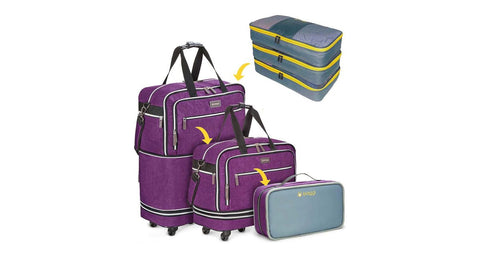
Table of Contents
- Why Standard Luggage Fails in Small Apartments
- How to Maximize Closet Storage Space for Luggage
- Under-Bed Luggage Storage: The Space You're Ignoring
- Luggage Storage Without a Closet: Creative Alternatives
- Using Luggage for Storage at Home Between Trips
- How to Store Luggage in Small Apartments: Common Mistakes
- Conclusion: Make Every Inch Count
- Frequently Asked Questions
Last Updated: October 12, 2026
Why Standard Luggage Fails in Small Apartments
Standard luggage fails in small apartments because it is built for the trip, not for the 50 weeks a year you are not traveling. A hard-shell suitcase holds its full footprint whether it is full or empty, and that footprint has to live somewhere. In a studio or one-bedroom flat, that somewhere is usually the closet floor, the entryway, or a corner of the bedroom.
The math is unforgiving. A typical large check-in bag claims a fixed block of floor or shelf space all year. Multiply that by two or three bags per household, and you have given up a shelf, a closet corner, and part of your bedroom.
That is the tension this guide from Biaggi is built around: your luggage should shrink when your trip ends. Below, we show you exactly how to store luggage in small apartments without losing a single drawer, shelf, or square of floor space.
How to Maximize Closet Storage Space for Luggage
The best way to maximize closet storage space for luggage is to stop treating bags as one solid object and start treating them as stackable, foldable units. Empty your bags completely, then look at what is actually left: fabric, frames, and wheels.
Start with these moves:
- Clear the top shelf and measure its height before you buy anything
- Group bags by size so smaller pieces nest inside larger ones
- Keep the bag you use most within easy reach
- Move seasonal or rarely used pieces to the highest shelf
Once the closet is organized, the real win is choosing luggage that folds down when the trip is over.
Vertical Stacking and Shelf Placement
Vertical stacking works because height is the one dimension most apartment closets have to spare. Most people fill the floor and the hanging rail, then forget the air above the top shelf.
A simple approach:
- Put rarely used bags on the highest shelf
- Stack by size, heaviest and largest at the bottom
- Use shelf dividers so stacks do not topple
- Leave a gap at the front so you can grab a bag without unloading the shelf
If your closet has no shelf above the rail, a freestanding stack of two or three bags in the corner still beats a pile on the floor.
Foldable Luggage That Compresses to Pouch Size
Foldable luggage is the single biggest change you can make in a small apartment. A bag that collapses into a pouch can live in a drawer, on a shelf, or under a bed when you are not traveling.
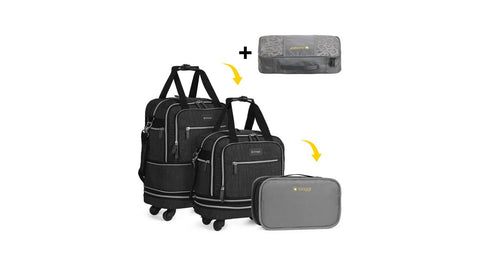
Biaggi's signature Zipsak is built exactly for this. The Zipsak Boost-Max + Zipcube Set starts as an easy-to-store pouch, rolls out as a five-wheeled carry-on, then expands upward into a large check-in bag. When the trip ends, it folds back down for a shelf, a drawer, or under the bed.

That is the difference between luggage that owns a shelf and luggage that borrows one.
Under-Bed Luggage Storage: The Space You're Ignoring
Under-bed storage is the space most apartment dwellers never use. The gap under a standard bed is often deep enough for a folded bag or a flat storage case, and it is dead space otherwise.
Here is how to make it work:
- Measure the clearance between the bed frame and the floor first
- Choose flat, low-profile bags over tall, rigid ones
- Slide bags in wheels-first so handles stay accessible
- Leave the corners clear so you can pull items out without lifting the mattress
A folded travel bag takes up a fraction of the room a rigid suitcase needs, which makes under-bed storage realistic instead of a squeeze.
Protecting Bags From Dust and Damage
Dust, damp, and pressure are the three things that shorten a bag's life in storage. Under-bed space sits close to the floor, where dust and moisture collect, so protection matters.
- Store bags clean and completely dry, never damp
- Use a breathable cotton cover or pillowcase rather than sealed plastic
- Avoid stacking heavy items on top of folded bags
- Check bags once a season for musty smells or mildew
Sealed plastic traps moisture and can cause mildew. Breathable fabric covers keep dust out while letting air move.
Luggage Storage Without a Closet: Creative Alternatives
Luggage storage without a closet comes down to finding vertical or hidden space you already own. You do not need a dedicated closet to store bags well.
Look at these spots first:
- The gap behind a sofa or between furniture and the wall
- A sturdy storage ottoman that doubles as seating
- The top of a wardrobe or bookcase
- A hard-to-reach kitchen cabinet above the fridge
- A storage bench at the foot of the bed
Each of these hides a folded bag in plain sight while keeping it accessible.
Entryway, Hallway, and Furniture Solutions
The entryway is where most people drop bags and where most clutter starts. A slim bench with storage underneath, or a tall cabinet with a narrow footprint, can hold folded luggage without eating floor space.
Hallways are underrated. A shallow console table with a lower shelf, or a wall-mounted rack above a doorway, can hold a bag or two out of the way. The rule is simple: use height and depth, not width.
Using Luggage for Storage at Home Between Trips
Using luggage for storage at home between trips turns an idle bag into a working part of your apartment. Instead of sitting empty, a suitcase can hold off-season clothes, spare bedding, or rarely used gear.
This works best when the bag is already going to sit somewhere. If it lives under the bed anyway, it may as well hold your winter coats.
A few rules keep this practical:
- Only store items you will not need for months
- Keep a written list taped to the bag so you know what is inside
- Do not overstuff, or the bag will not fold or close properly
- Choose items that will not crease badly under pressure
The compression cubes from Biaggi help here too. The Ultimate Compression Zipcube (Set of 2) keeps clothing fresh and clean while freeing up space inside the bag, so stored items stay tidy and take up less room.

What to Pack Inside Stored Bags (and What to Avoid)
Pack soft, flat, seasonal items. Avoid anything that can leak, smell, or attract pests.
Good candidates:
- Off-season clothing and coats
- Spare bedding and towels
- Extra pillows and cushion covers
- Seasonal accessories like gloves and scarves
Keep these out:
- Food or anything that can spoil
- Open liquids, toiletries, or cleaning products
- Damp or dirty items
- Anything you need more than once a month
For smaller odds and ends, the Zipcubes-Mini Cube Duo keeps chargers, toiletries, and undergarments grouped so nothing shifts around inside a stored bag.

How to Store Luggage in Small Apartments: Common Mistakes
The biggest mistake is buying storage containers before you know your actual measurements. People guess, buy a bin that does not fit, and end up with more clutter than they started with.
Other mistakes we see often:
- Storing bags damp, which leads to mildew and odors
- Keeping rigid suitcases that never fold or nest
- Filling every inch until nothing is easy to reach
- Buying more bags than trips you actually take
The fix is a short, honest audit. Count your bags. Count your trips per year. If the numbers do not match, you are storing luggage you do not need.
| Mistake | Why It Hurts | The Fix |
|---|---|---|
| Guessing measurements | Bins and bags do not fit | Measure clearance first |
| Storing bags damp | Mildew and musty smells | Dry fully before storage |
| Keeping rigid suitcases | Fixed footprint all year | Switch to foldable designs |
| Overpacking storage | Nothing is easy to reach | Leave a grab gap at the front |
| Owning too many bags | Clutter you never use | Match bags to real trips |
Conclusion: Make Every Inch Count
Small apartments punish fixed shapes. The bags that work in tight spaces are the ones that shrink, fold, and tuck away when the trip is over.
At Biaggi, we build luggage around that idea. Our foldable Zipsak starts as a pouch and unfolds into a full carry-on, our Zipcubes add structure and compression so packed items take up less room, and the whole system fits neatly in a closet, a drawer, or under a bed. As seen on Shark Tank, Biaggi luggage is made to travel in style and store without a fight.
Get started with Biaggi and reclaim the floor space your old suitcases have been hoarding.
Frequently Asked Questions
Where should I store luggage in a small apartment?
The best spot depends on your layout. Closet shelves work well for foldable bags that compress flat. Under-bed space fits larger suitcases if you use dust covers. If you have neither, try the top of a wardrobe, behind a sofa, or inside an ottoman. The key is choosing a spot that stays dry, away from direct heat, and out of daily foot traffic so your bags stay clean and undamaged between trips.
Can I store smaller suitcases inside larger ones?
Yes, nesting is one of the oldest space-saving tricks. Place smaller bags, packing cubes, or toiletry pouches inside your largest suitcase before storing it. This keeps everything in one footprint and protects the smaller items from dust. Just avoid overfilling the outer bag, since pressure on zippers and wheels can shorten its lifespan over time.
Is it okay to store luggage under a bed?
Under-bed luggage storage works well if you take a few precautions. Use a dust bag or cover to keep bags clean, and avoid placing them directly against heating vents or in damp basements. Measure your bed clearance first, since most standard frames offer 20 to 30 centimetres. Foldable bags that compress into flat pouches are especially useful here because they slide into gaps that rigid hard-shell cases cannot.
How do I keep stored suitcases clean and dust-free?
Cover every bag with a breathable dust bag, pillowcase, or cotton sheet. Avoid plastic bags, which trap moisture and can cause mildew. Before storing, wipe down wheels and handles, and make sure the bag is completely dry inside. If you store bags under a bed or on a high shelf, check them every few months for dust buildup. Foldable designs like the Zipsak Boost-Max store as a compact pouch, which cuts down on exposed surface area and makes dusting easier.


Comments (0)
There are no comments for this article. Be the first one to leave a message!