
 Accounts
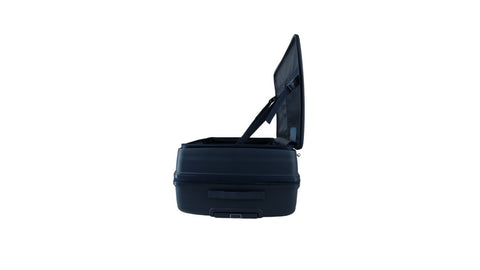
Table of Contents
- Lightweight Travel Luggage at a Glance: 2026 Comparison
- Best Lightweight Luggage for Carry-On Travelers
- Lightweight Luggage Weight: What the Numbers Mean
- Lightweight Hard-Shell Suitcase: Shell Materials and Durability
- Foldable Travel Luggage: Space-Saving Storage for Small Apartments
- Checked Luggage Picks for Long Trips
- Airline Weight Rules, Wheels, and Long-Term Value
- Conclusion
- Frequently Asked Questions
Last Updated: October 7, 2026
Lightweight Travel Luggage at a Glance: 2026 Comparison
Lightweight travel luggage is luggage built to keep empty weight low without giving up structure, wheels, or packing space.

At Biaggi, we build foldable, space-saving bags for exactly this problem, so we pay close attention to what the numbers actually say. Forbes tested 10 lightweight bags for its 2026 roundup and picked seven winners, several weighing 5 lb. or less (Forbes' Best Lightweight Luggage 2026).
Quick Picks
- Best overall carry-on: Biaggi Glide Expandable Carry On ($119.99, 5.95 lb.)
- Best for long trips: Biaggi Glide Expandable Check In ($149.99, 10.3 lb.)
- Best value for both: Biaggi Glide 2 Piece Set ($249.99)
- Best under-seat option: Biaggi Zipsak Boost! Underseater ($99.99)
| Bag | Price | Empty Weight | Best For |
|---|---|---|---|
| Glide Expandable Carry On | $119.99 | 5.95 lb. | Weekly business trips |
| Runway Hardside Hybrid Carry On | $199.99 | Not listed | Hybrid packers |
| Zipsak Boost! Underseater | $99.99 | Not listed | Under-seat travel |
| Glide Expandable Check In | $149.99 | 10.3 lb. | Long-haul trips |
| Glide 2 Piece Set | $249.99 | 16.25 lb. combined | Every trip type |
Best Lightweight Luggage for Carry-On Travelers
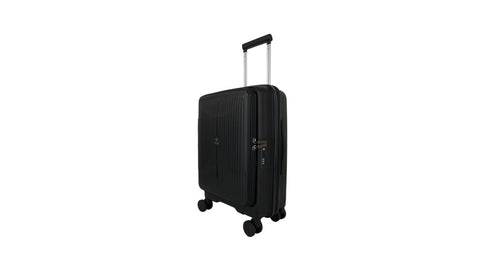
Our top carry-on pick is the Glide Expandable Carry On: 5.95 lb., front-opening, so you pack once and reach what you need without flipping the bag flat on a hotel bed.

That front-opening design is the real differentiator: traditional hardside luggage splits down the middle, so half your packing space is only accessible when fully open.
For a hybrid, the Runway Hardside Hybrid Carry On ($199.99) pairs a German polycarbonate shell with Japanese Hinomoto "silent-run" wheels. To skip the overhead bin entirely, the **Zipsak Boost!
Lightweight Luggage Weight: What the Numbers Mean
Empty weight only matters relative to your airline's allowance and how much usable space the bag gives you. A 4.6 lb. spinner sounds impressive until the airline caps you at 15 lb. total, leaving 10.4 lb. for your things. And a 5 lb. bag holding 40 liters beats a 4 lb. bag holding 28 every trip.
Here's how empty weight breaks down in practice:
- Under 6 lb.: Ultra-light territory. Our Glide Carry On sits at 5.95 lb.
- 6-8 lb.: Standard lightweight hardside. Most travelers land here.
- 8-11 lb.: Common for check-in bags with reinforced frames.
- Over 11 lb.: You're carrying structure, not contents.
Weight-to-Capacity Ratio: The Number Most Guides Skip
Raw weight tells half the story; the other half is usable liters per pound. Divide packed volume by empty weight to compare bags fairly, even across sizes.
| Bag | Empty Weight | Usable Capacity | Liters per Pound |
|---|---|---|---|
| Glide Expandable Carry On | 5.95 lb. | ~40 L expanded | ~6.7 L/lb. |
| Glide Expandable Check In | 10.3 lb. | ~90 L expanded | ~8.7 L/lb. |
| Zipsak Boost! Underseater | Not listed | Not listed | Not listed |
A higher liters-per-pound number means less of your allowance is spent on the bag itself. Checked bags usually win this ratio because their frames scale more efficiently, which is why a 10.3 lb. check-in can beat a 6 lb. carry-on for a two-week trip.

Airline Weight Limits: What Actually Decides Your Trip
"Lightweight" is meaningless without the airline's number next to it. Most U.S. carriers publish no hard carry-on weight cap and police size instead; international carriers are stricter.
- U.S. legacy carriers (Delta, American, United): No published carry-on weight limit for standard economy; size limits are typically 22 x 14 x 9 in. Checked bags are usually capped at 50 lb. before overweight fees kick in.
- Southwest: No published carry-on weight limit; two free checked bags up to 50 lb. each.
- International carriers: Many publish a hard carry-on cap, commonly 15 lb. (7 kg) on carriers like Ryanair, easyJet, and several Asian and European airlines. Some business-class allowances rise to 22 lb. (10 kg).
- Personal items: Usually no weight limit, but size is tightly enforced (often around 18 x 14 x 8 in.).
A 5.95 lb. carry-on leaves roughly 9 lb. of packing room under a 15 lb. international allowance and effectively unlimited room under a U.S. size-only rule, which is why the same bag can feel feather-light on one itinerary and gate-checked on another.
Built-In Weight Sensors
Our Runway Large Check-In Suitcase ($284.99) includes a built-in weight sensor, so you know before the check-in desk does whether you're over the limit, the single most useful feature for frequent flyers juggling carriers.
Lightweight Hard-Shell Suitcase: Shell Materials and Durability
Shell material decides whether your bag survives baggage handling, and what it costs over five years, not just day one. The three you'll see most are polypropylene, polycarbonate, and ABS plastic, and they behave very differently under impact.
Polypropylene, used in the Glide line, flexes on impact and springs back, why the Glide Carry On manages 5.95 lb. without feeling flimsy. Polycarbonate is stiffer and takes scratches well; it's the Runway line's shell. ABS plastic is cheapest and most prone to corner cracks after repeated gate checks.
How the Three Shells Compare on the Things That Actually Matter
| Shell | Impact Behavior | Weight | Typical Lifespan | Repairability |
|---|---|---|---|---|
| Polypropylene | Flexes and rebounds | Lightest | 5-8+ years with care | Cracks usually not user-repairable; warranty-dependent |
| Polycarbonate | Stiff, scratch-resistant | Light-to-mid | 5-10 years | Scratches cosmetic; deep cracks often terminal |
| ABS | Rigid, brittle | Mid-to-heavy | 2-4 years under frequent gate-checking | Corner cracks common; rarely worth repairing |
Durability Isn't Only About the Shell
A review of wheeled luggage usability found that many wheeled designs perform poorly on rough terrain, and noted that larger wheels can fix part of the problem. That matters if your trip involves cobblestones, gravel, or a badly maintained airport curb. In practice, the failure points travelers report most often are:
- Wheels: Spinner casters are the first thing to fail on cheap bags. Replaceable wheels are the single biggest repairability win.
- Handles: Telescoping handles with wobble after a year usually mean a worn internal bushing, not a broken tube.
- Zippers: On softside and hybrid bags, a #10 coil zipper outlasts a #8 by a wide margin under repeated overstuffing.
- Corners: Where ABS cracks first, and where polypropylene's flex pays off.
Repairability and Long-Term Ownership Cost
This is where "lightweight" stops being the only metric that matters.
- Replaceable parts: Wheels and handles that can be swapped with basic tools extend a bag's life by years. Sealed, glued, or riveted assemblies usually can't be repaired at home.
- Warranty exclusions: Most luggage warranties cover manufacturing defects but exclude airline damage, normal wear, and cosmetic scratches, the exact things that end a bag's life.
- Repair access: Brands with U.S.-based repair centers or authorized partners make claims practical. Brands without them turn a warranty into a shipping exercise.
- Cost per year: A $285 bag that lasts 8 years costs about $36/year. A $90 bag replaced every 2 years costs $45/year, and sends more plastic to landfill.
Our Runway Check-In carries a 10-year warranty, which is the kind of coverage that turns a higher upfront price into a lower cost per trip. A cheap bag replaced every 18 months costs more than a durable one bought once.
Sustainability Trade-Offs
Lighter isn't automatically greener. Recycled polycarbonate and polypropylene shells reduce virgin plastic use, but a bag that fails in two years offsets that gain. The real lever is durability plus repairability: a bag lasting eight years with replaceable wheels has a far lower lifetime footprint than a lighter bag replaced twice in the same window. Weigh recycled content alongside warranty length and wheel replaceability, not instead of them.
Foldable Travel Luggage: Space-Saving Storage for Small Apartments
Foldable travel luggage solves a problem that has nothing to do with the airport: where the bag lives when you're not using it.
Our foldable designs compress down for storage and open into full-size bags when you travel. The **Zipsak Boost!
For travelers who want organization to survive the fold, the Ultimate Compression Zipcube set ($49.99) uses a compression feature that keeps clothing clean while freeing up space inside the bag.
Checked Luggage Picks for Long Trips
Checked luggage is where weight savings pay off most: every pound saved on the bag is a pound you can pack. Our Glide Expandable Check In weighs 10.3 lb. with the same front-opening design and 360° spinner wheels as its carry-on sibling.
OutdoorGearLab tested 12 popular checked bags for its 2026 review to identify value and bags suited to specific needs (OutdoorGearLab's checked luggage testing).
For travelers who want a weight sensor built in, the Runway Large Check-In Suitcase ($284.99) adds an integrated TSA lock, a drawstring laundry bag, oversized interior pockets, and a 10-year warranty. If you'd rather buy once for every trip type, the Glide 2 Piece Set ($249.99) pairs the carry-on and check-in at a lower combined price than buying separately.

Airline Weight Rules, Wheels, and Long-Term Value
Airline weight rules vary enough that one "lightweight" number can't cover every carrier. Check your airline's allowance before packing, the difference between a 15 lb. and 22 lb. carry-on limit changes what bag makes sense.
Wheels deserve the same scrutiny. Spinner wheels are easier on smooth terminal floors, but wheeled luggage often struggles on rough ground.
Long-term value comes down to warranty coverage, repairability, and how many years the shell holds up.
Conclusion
The hard part isn't finding a light bag, it's finding one that stays light after packing and still rolls smoothly through a crowded terminal. We built the Glide line around that trade-off: a 5.95 lb. polypropylene carry-on with front-opening access, 360° spinner wheels, and an aluminum handle, plus a matching 10.3 lb. check-in and a 2-piece set for every trip length.
Frequently Asked Questions
Is it better to have hard or soft shell luggage?
It depends on what you pack. A lightweight hard-shell suitcase made from polypropylene or polycarbonate protects fragile items and resists scratches and water, which suits electronics and business trips. Softside bags in nylon or polyester fabric flex into tight spaces and often include exterior pockets. Hybrid designs combine a rigid shell with front-access convenience. For frequent travel, a hard shell with a front-opening design gives you both protection and easy access without unpacking everything.
How much should a lightweight carry-on suitcase weigh?
Aim for an empty weight under 7 lb. Forbes tested 10 lightweight bags in 2026 and selected seven winners, some weighing 5 lb. or less. Biaggi's Glide Expandable Carry On weighs 5.95 lb, which leaves more of your weight allowance for what you actually pack. If your airline caps carry-on weight at 15 to 22 lb, that difference matters on every trip.
Is lightweight luggage durable enough for frequent travel?
Low weight does not automatically mean fragile, but it does change what you should check. Shell material matters: polypropylene and polycarbonate resist impact, while cheap ABS plastic cracks more easily. Wheel quality matters just as much, since wheeled luggage often performs poorly on rough terrain. Look for smooth-rolling spinner wheels, a sturdy telescoping handle, and a warranty that covers years of use, such as Biaggi's 10-year coverage on Runway check-in models.
What features should I look for in lightweight luggage?
Start with empty weight, then check dimensions against your airline's carry-on size limit. Prioritize four-wheel spinner suitcase designs for maneuverability, a telescoping handle, and interior organization like compression straps and zippered pockets. An expandable compartment adds packing capacity for longer trips. If storage space at home is tight, foldable travel luggage that compresses into a pouch solves two problems at once: it is light to carry and easy to store between trips.
How do I choose between a lightweight suitcase and a travel bag?
Choose a suitcase when you want structure, wheeled maneuverability, and protection for fragile items. Choose a travel bag or backpack when you need to squeeze under a seat or carry gear on uneven ground. Many travelers use both: a wheeled carry-on for the airport and a backpack like the Carry Cube Backpack as an under-seat bag. If you do a mix of weekend trips and longer vacations, a two-piece set covers both without buying twice.


Comments (0)
There are no comments for this article. Be the first one to leave a message!