
 Accounts
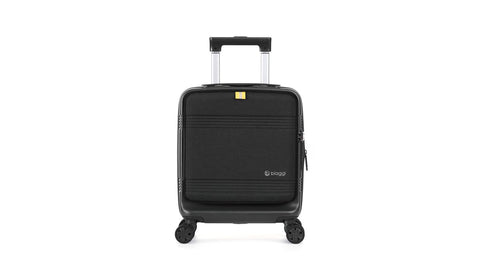
Table of Contents
- Why Underseat Carry-On Luggage Beats the Overhead Bin
- Airline Personal Item Size Limits: What Actually Fits
- Underseat Bag Dimensions: How to Measure Before You Buy
- The Best Underseat Luggage for Every Type of Trip
- Underseat Carry-On Backpack vs. Wheeled Bag: Which Fits Your Travel Style?
- Packing Capacity, Weight, and Organization: Real Loadouts That Work
- How to Choose Underseat Carry-On Luggage That Lasts
- Conclusion
- Frequently Asked Questions
Last Updated: October 18, 2026
Why Underseat Carry-On Luggage Beats the Overhead Bin
Underseat carry-on luggage is a bag sized to slide beneath the airplane seat in front of you, keeping your essentials within reach and skipping the overhead-bin scramble entirely. At Biaggi, we build foldable underseaters around exactly that promise: a bag that fits under the seat, then folds flat into your closet when you get home. The case for going underseat is simple. You board later, sit down sooner, and never fight for bin space on a full flight. You also dodge gate-check stress on regional jets, where overhead space runs out fast. Pack Hacker frames its underseat luggage guide around avoiding carry-on fees, and that logic holds: a bag that qualifies as a personal item can save you money on low-cost carriers. The trade-off is capacity. You pack less, so you pack smarter. Below, we break down what actually fits, how to measure, and which underseat bag suits your trip.
Airline Personal Item Size Limits: What Actually Fits
No single size fits every airline. That is the first thing to understand about airline personal item size limits. Carl Friedrik describes 17 × 13 × 8 inches as a safe general size but notes dimensions vary by airline and aircraft type. Voyage references Frontier's 18 × 14 × 8-inch personal-item dimensions. Reader's Digest reports JetBlue's underseat personal-item limit as 17 × 13 × 8 inches.
Most published size guides stop there. The problem is that airline limits change, and a table without a date or a measurement method is only as good as the day it was written. Below is a dated, source-linked snapshot of personal-item limits for airlines commonly flown by underseat travelers.
| Airline | Personal-Item Limit | What the Measurement Includes | Verified |
|---|---|---|---|
| Frontier | 18 × 14 × 8 in | Bag body; must fit sizer | October 2026 |
| JetBlue | 17 × 13 × 8 in | Underseat personal item | October 2026 |
| Spirit | 18 × 14 × 8 in | Personal item; sizer-enforced | October 2026 |
| Allegiant | 16 × 15 × 7 in | Personal item | October 2026 |
| United | 17 × 10 × 9 in | Personal item (varies by fare) | October 2026 |
| Delta | 17 × 13 × 9 in | Personal item | October 2026 |
| American | 18 × 14 × 8 in | Personal item | October 2026 |
| Southwest | 16.25 × 13.5 × 8 in | Personal item | October 2026 |
| Alaska | 17 × 13 × 9 in | Personal item | October 2026 |
Two caveats matter more than the numbers themselves. First, the measurement method differs: some airlines measure the bag body only, while others include wheels, handles, and any expanded sections. A bag advertised as 17 × 13 × 8 inches may measure 18 × 14 × 9 inches once you add wheels and a handle, which puts it over the limit on stricter carriers. Second, the sizer is the real test.
Underseat Bag Dimensions: How to Measure Before You Buy
Measure the packed bag, not the empty one. That single habit prevents most underseat surprises. Bag measurements on a spec sheet describe an empty bag; add clothes, a laptop, and a water bottle and the real dimensions grow. Here is how we would do it:
- Pack the bag exactly as you would for the trip.
- Lay it flat and measure length, width, and height with a tape measure.
- Include wheels, handles, and any expanded sections in the height figure.
- Compare the packed numbers against your airline's personal-item limit.
- Leave a small margin so the bag slides in without force.
A Reddit user noted their Patagonia Black Hole Mini MLC fit under seats and in personal-item sizers only when slightly underpacked to hit 17 inches, per the r/onebag discussion. That is the real-world lesson: a bag that fits on paper may still need underpacking to clear a sizer.
The Best Underseat Luggage for Every Type of Trip
For most travelers, the best underseat luggage balances fit, durability, and storage between trips. Our top pick is the Runway Hybrid Expandable Underseater at $164.99. It fits under the seat, rolls on wheels, and adds easy front access plus a hidden drink port, so you reach your essentials without unpacking. Premium materials and wheels make travel a breeze, and it folds away when you are home.

If you want maximum versatility for the money, the Zipsak Boost! Underseater at $99.99 starts as a small storage pouch, opens into a four-wheeled underseater, and expands a full 5 inches upward into a TSA-approved carry-on. An extra-deep packing cube comes included.

For a complete packing system, the Runway Underseater + Zipcubes Value Bundle at $189.99 pairs the Runway with a three-piece Zipcube set and a Mini Cube Duo. The Zipsak Boost Underseater Bundle at $129.99 adds compression cubes and a Mini Cube Duo for a lower entry point.

| Bag | Price | Best For | Standout Feature |
|---|---|---|---|
| Runway Hybrid Expandable Underseater | $164.99 | Weekly business travel | Front access, drink port, wheels |
| Zipsak Boost! Underseater | $99.99 | One-bag versatility | Folds to pouch, expands to carry-on |
| Runway + Zipcubes Bundle | $189.99 | Organized packers | Three Zipcubes + Mini Cube Duo |
| Zipsak Boost Bundle | $129.99 | Budget-conscious travelers | Compression cubes included |
Underseat Carry-On Backpack vs. Wheeled Bag: Which Fits Your Travel Style?
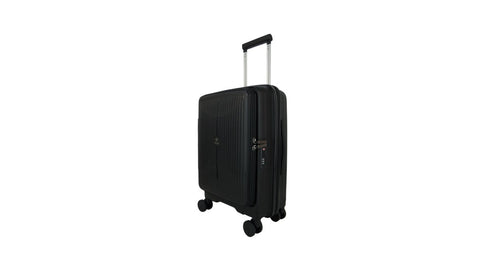
An underseat carry-on backpack suits travelers who walk far and climb stairs; a wheeled bag suits those who want to roll through the terminal. Backpacks keep your hands free and handle cobblestones and transit steps without complaint. Wheeled underseaters, like our Runway and Zipsak models, take the weight off your shoulders and glide through long concourses. The catch with wheels is that the frame and handle eat into packing space and add weight. Soft-sided bags flex to squeeze under tight seats; hard-sided luggage protects contents better but fits less forgivingly. For accessibility or mobility needs, a four-wheel spinner that rolls upright beside you is often easier on the body than a loaded backpack. Match the carry style to how you actually move through airports, not to how the bag looks in a photo.
Packing Capacity, Weight, and Organization: Real Loadouts That Work
Capacity in liters tells you less than a realistic loadout does. A 30-liter underseater and a 30-liter backpack can hold very different things depending on shape, compartments, and how much structure the bag has.
Overnight work trip (one to two nights). Two outfits (one worn), one pair of shoes, a toiletry kit in a quart-size bag, a 14-inch laptop, a charger, and a folder for documents. This is the loadout most underseaters are built for.
Weekend leisure trip (two to three nights). Three outfits, one pair of shoes, a toiletry kit, a light jacket, a paperback or e-reader, and a water bottle. This is where expandable underseaters earn their keep: a bag that expands a few inches can take the extra layer, but check that the expanded dimensions still clear your airline's personal-item limit.
Family essentials (day bag for a parent traveling with a child). One change of clothes per child, snacks, a tablet, wipes, and a small first-aid pouch.
Weight matters as much as volume. A lightweight bag leaves more of your personal-item allowance for actual contents, and a bag that is easy to lift into an overhead bin (if you end up using one) is easier to manage on a full flight. Organization is where most underseaters earn their keep.
A final note on weight limits: personal items are rarely weighed, but carry-on bags sometimes are on strict low-cost carriers. If your underseater doubles as a carry-on when expanded, check the airline's weight limit for carry-on bags, not just the size limit, before you rely on it.
How to Choose Underseat Carry-On Luggage That Lasts
Durability comes down to materials, construction, and how the bag handles being folded and unfolded. If you travel weekly, the folding mechanism and zippers take constant wear, so check the stitching and the handle attachment points before you buy. A foldable bag should still hold its structure when packed; ours use packing cubes to keep contents organized and protected inside. Price and value deserve an honest look. A budget duffel costs less upfront but may not survive regular airport use, while a well-built underseater spreads its cost across years of trips. Weigh the warranty and return policy too, since those tell you how much confidence the maker has in the product. Biaggi's foldable design means the bag stores flat in a closet between trips, which matters if you live in a small apartment where storage space is scarce.
Conclusion
The hardest part of underseat travel is not the flight, it is finding a bag that fits the seat, survives weekly use, and stores away when you are home. That is the problem Biaggi set out to solve with foldable luggage that compresses into your closet and rolls out ready for the next trip. Our Runway Hybrid Expandable Underseater fits under the seat with front access and a hidden drink port, while the Zipsak Boost! folds to a pouch and expands into a full carry-on when you need more room. Both are built for travelers who want convenience without giving up style. Get started with Biaggi and travel lighter, pack smarter, and skip the overhead-bin scramble.
Frequently Asked Questions
Does a backpack count as an underseat bag?
Yes, a backpack can count as an underseat bag if it fits within your airline's personal-item size limits. Most major airlines allow a personal item that slides under the seat in front of you, and many underseat carry-on backpacks are designed specifically for this. Check your airline's dimensions: JetBlue lists 17 x 13 x 8 inches, for example. A soft backpack can compress to fit a sizer, but a structured one may not. Always measure the packed backpack, including any front pockets, before you fly.
What is the typical size of underseat cabin luggage?
Most underseat carry-on luggage measures around 17 x 13 x 8 inches, though exact limits vary by airline and aircraft. Carl Friedrik describes 17 x 13 x 8 inches as a safe general size, but notes that dimensions can differ. Some low-cost airlines are stricter: Voyage references Frontier's 18 x 14 x 8-inch personal-item limit. A bag that fits one airline may not fit another, so check your specific carrier's published size requirements before buying. Soft-sided bags often give you a little flexibility if you underpack slightly.
How do I know if my bag will fit under an airplane seat?
Measure your packed bag, including wheels and handles, and compare it to your airline's personal-item size limits. Then check whether the bag fits under a seat in front of you. Seat clearance varies by aircraft type, so a bag that fits on one plane may not fit on another. A Reddit user noted their Patagonia Black Hole Mini MLC fit under seats and in personal-item sizers only when slightly underpacked to fit 17 inches. Test your bag at home with a tape measure and pack it as you would for the trip.
What features should I look for in underseat carry-on luggage?
Look for a bag that meets your airline's personal-item dimensions, has durable materials, and offers easy access to essentials. Wheels and a telescoping handle help with portability, while soft-sided bags can compress to fit tight spaces. Organization matters: compartments, a laptop pocket, and packing cubes keep your gear accessible. For frequent flyers, consider a bag that expands for extra capacity, like the Zipsak Boost! Underseater, which expands a full 5 inches to become a carry-on. Check weight too; lightweight bags are easier to lift into overhead bins when needed.


Comments (0)
There are no comments for this article. Be the first one to leave a message!